
What is an Ethereum Address?
An Ethereum address is a unique identifier used to send, receive, and store assets on the Ethereum network. It is represented as a 42-character hexadecimal string that begins with “0x”.
There are two main types of Ethereum addresses:
- Externally Owned Addresses (EOAs): Regular wallet addresses controlled by a user, used to send, receive, and manage funds.
- Contract Addresses: Addresses linked to smart contracts, which automatically run code when people interact with them.
While both address types look the same, they serve different purposes and are presented differently on the block explorer.
Externally Owned Addresses (EOAs)
An Externally Owned Address (EOA), also known as a wallet address, is a public account used to send, receive, and hold funds on the Ethereum network. It is controlled by a private key, which allows the owner to initiate transactions and interact with smart contracts.
The Ethereum address itself is the “public” address that you share to receive funds. The private key, on the other hand, should always be kept secure, as it provides full access to the assets in the address.
Understanding an EOA Page on Etherscan
When you open an EOA page on Etherscan, you are looking at a wallet’s balances and history. The page is structured into two main areas.
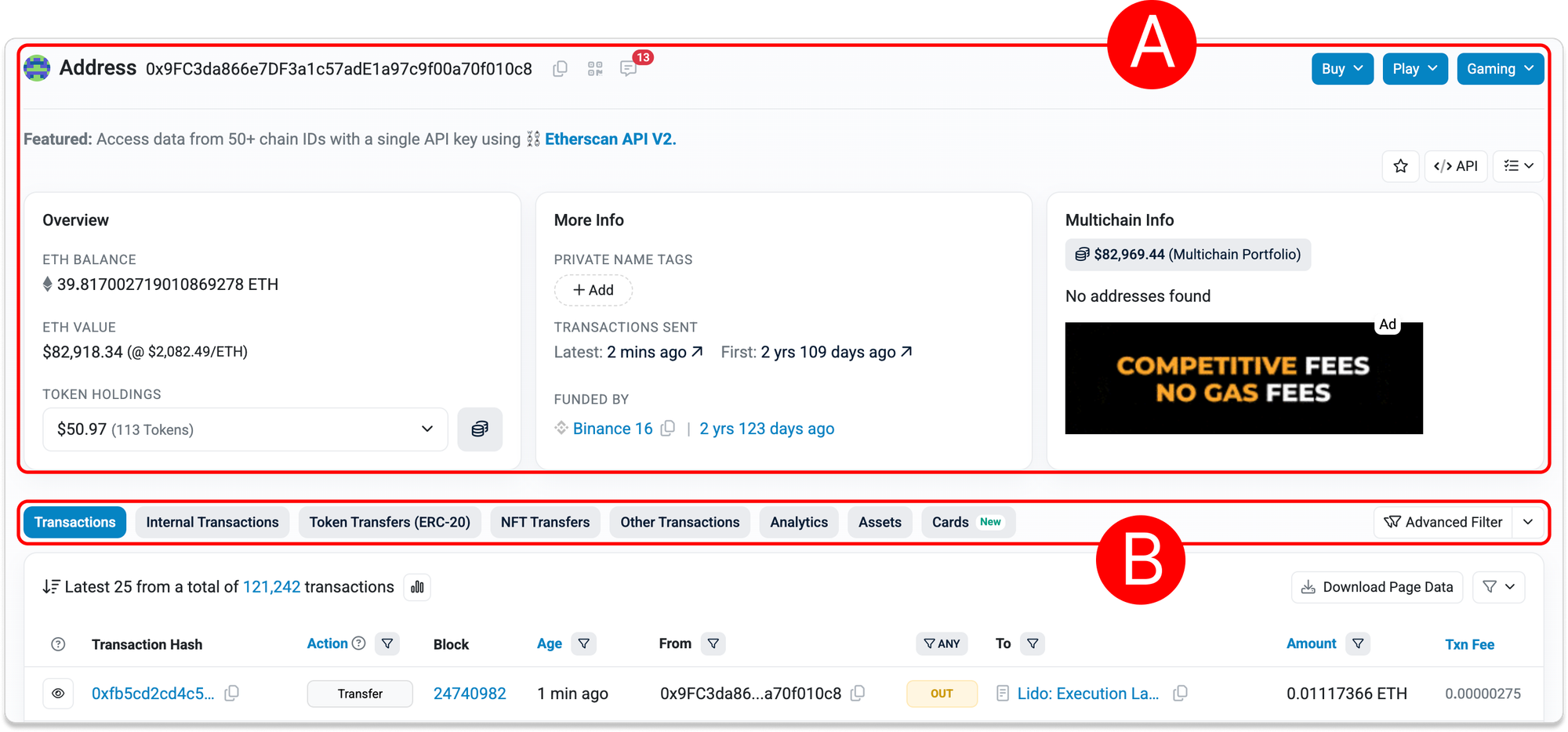
A. Overview
At the top of the page, you will see a summary of the address:
- Address header: The wallet address being viewed.
- ETH Balance: The amount of ETH currently held.
- ETH Value: The estimated fiat value based on current ETH price.
- Token Holdings: The total number of tokens held and the total dollar value.
- Private Name Tags: Tag this address with a private name tag for your personal reference.
- Transactions Sent: Shows the latest outgoing transaction and when the address first became active.
- Funded By: The first address & transaction that funded this address with ETH.
- Multichain Info: Aggregated portfolio view across Etherscan-supported chains.
- ⭐ Add address to Watch List: Track this address and receive email notifications when it sends or receives transactions.
- </> API: Opens the Etherscan API endpoint for the address's native token balance. This is useful if you want to retrieve the balance programmatically for analysis.
- More options: Access more tools with this address such as Token Approvals, Validate Account Balance, Check Previous Balance, Update Name Tag or Label, and Report/Flag Address.
B. Activity Tabs
Below the overview, the tabs let you explore different types of activity for this address:
- Transactions: See all regular ETH transfers in and out of this address.
- Internal Transactions: See ETH movements triggered by smart contracts (not direct transfers).
- Token Transfers (ERC-20): Track all fungible token activity (for example, USDT, USDC).
- NFT Transfers: View all NFT activity (ERC-721 and ERC-1155).
- Other Transactions: Includes cross-chain activity and EIP-7702 authorizations, if any.
- Analytics: Get a quick overview of address activity, including charts and frequent counterparties.
- Assets: View the full portfolio, including tokens, NFTs, and multichain holdings.
- Cards: View info about this address such as unclaimed airdrops and token approvals, all in one place.
- Advanced Filter: Refine and search transactions using specific criteria such as transaction type, method, block range, amount, or address filters.
Contract Addresses
Contract address refers to the address hosting a collection of code on the Ethereum blockchain that executes functions. These functions of a contract address are executed when a transaction with associated input data (contract interaction) is made to it.
The contract address is usually created when a contract is deployed to the Ethereum Blockchain. Both Externally Owned and Contract Addresses share the same format of having 42 hexadecimal characters.
How Contract Pages Differ on Etherscan
At a glance, contract address pages look similar to EOA pages. They include the same overview section and activity tabs.
However, contract pages include additional information and tools related to the smart contract itself.
A. Contract-Specific Information
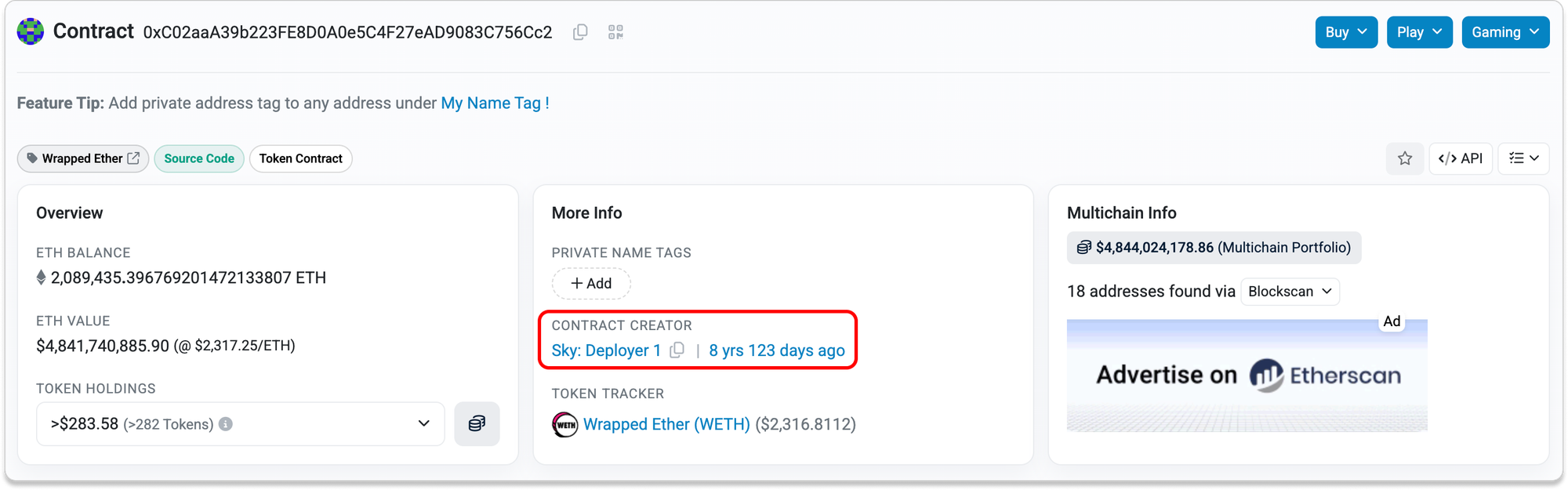
In the overview section, contract pages show the Contract Creator, which identifies the address that deployed the contract and when it was created. This replaces the Funded By field that is typically shown on EOA pages.
B. Contract Tabs and Interaction
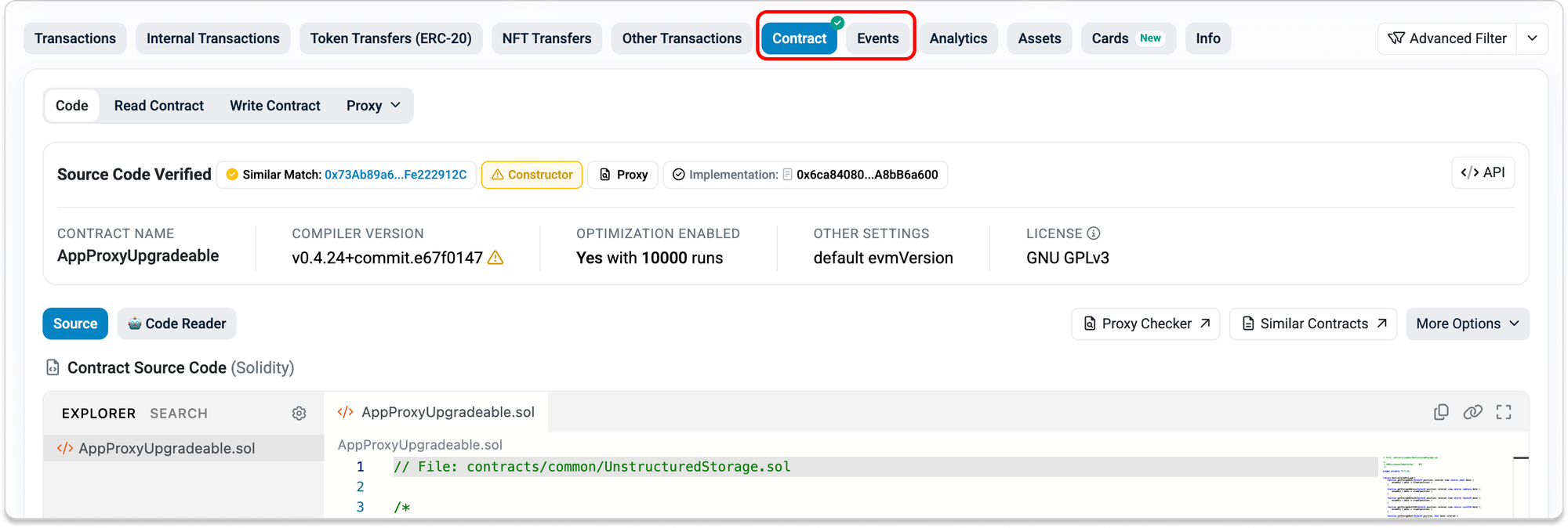
Contract pages include additional tabs that are not present on EOAs:
- Contract:
- Code: View the contract’s source code and technical details (if verified).
- Read / Write Contract: View contract functions or connect your Web3 wallet to interact with it and execute transactions.
- Proxy Contract: View proxy contract details and access implementation contracts (if applicable). Learn more about the types of proxy contracts detected by Etherscan.
- Events: See activity logs generated by the contract when specific actions are triggered.

Still Have Questions?
Supported Explorers
 Abscan
  Apescan
  Aptoscan
  ArbiScan
  BaseScan
  Berascan
  Blastscan
  BscScan
  BTTCScan
  CeloScan
  Etherscan
  Fraxscan
  HyperEVMScan
  KatanaScan
  Lineascan
  Mantlescan
  MegaETH Etherscan
  MemeCoreScan
  MonadScan
  opBNB Explorer
  OP Mainnet Etherscan
  Plasmascan
  PolygonScan
  SeiScan
  SnowScan
  SonicScan
  StableScan
  Taikoscan
  Uniscan
  WorldScan
  XDCScan
  RobinScan
  ArcScan